

As AI adoption accelerates, international clients are becoming more discerning. The question is no longer whether staffing partners use AI, but whether it meaningfully improves how remote teams are managed.
Working with global clients at TeamUp, we see this clearly: clients are not impressed by buzzwords. They value AI when it delivers clarity, reduces uncertainty, and simplifies operations across distributed IT teams.

Visibility and transparency come first
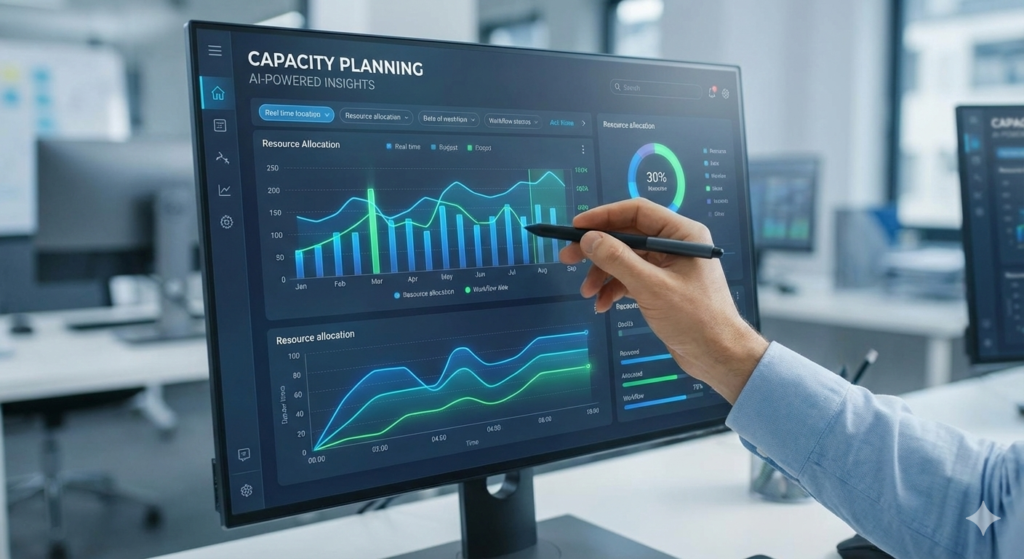
One of the strongest expectations clients have from AI-powered staffing solutions is visibility. They want real-time insight into what is happening across their remote teams—without micromanaging.
AI-enabled dashboards and reporting help answer critical operational questions:
- Who is working on which initiatives?
- Where are current bottlenecks?
- How is capacity evolving over time?
At TeamUp, improving visibility is a core focus. When clients can clearly see progress and capacity, trust increases and operational friction decreases.
Better decisions, not more metrics
Clients are not looking for an overload of data. They want relevant, actionable insights that support decision-making.
AI adds value when it highlights risks early, identifies workload imbalances, and supports forecasting. The goal is not automation for its own sake, but smarter decisions backed by reliable data.
Fewer tools, lower operational overhead
Another consistent expectation is efficiency. Clients want to reduce the number of disconnected tools and manual handoffs involved in managing remote teams.
AI helps consolidate functions that were previously fragmented—such as pipeline management, capacity tracking, and performance visibility—into cohesive operational views. This simplification is especially critical for partners operating across time zones.
Technology with human accountability
While clients appreciate AI-enabled workflows, they still expect clear ownership and accountability. Technology should support human decision-makers, not replace them.
At TeamUp, AI enhances operations, but responsibility remains with our people. This balance is essential for building trust in long-term remote engagements.
What clients truly expect from AI
Ultimately, clients expect AI to make remote IT collaboration smoother, more predictable, and easier to manage. They value staffing partners who use AI to reduce manual work, increase transparency, and support informed planning.
AI is most effective when it fades into the background—when processes feel simpler rather than more complex. In 2025, the most successful remote IT teams are not those with the most advanced tools, but those using AI thoughtfully to support how people actually work.